Table of Contents
ToggleCarpenter ants aren’t like typical household pests, they don’t eat your food or spread disease. Instead, they tunnel through the wood framing, joists, and studs that hold your house together, leaving behind galleries (hollow passages) that weaken structural integrity over time. A single colony can contain thousands of workers, and what starts as a minor nuisance can turn into thousands of dollars in repairs if left unchecked. The good news? Identifying and eliminating carpenter ants is absolutely doable for a homeowner, whether you prefer chemical treatments, natural methods, or calling in the pros. This guide covers the best carpenter ant killer options available in 2026, plus prevention strategies to keep them from returning.
Key Takeaways
- Carpenter ants tunnel through structural wood to create galleries, and a mature colony can contain 10,000 to 20,000 workers, making early detection and treatment critical to prevent costly damage.
- The most effective carpenter ant killer options include liquid termiticides, ant baits, and dust formulations—choose based on your preference for speed, coverage, and chemical exposure.
- Natural alternatives like diatomaceous earth and boric acid are gentler than synthetic insecticides but require consistent reapplication every 7–10 days for best results.
- Eliminate moisture sources, maintain 6 inches of clearance between wood and soil, trim overhanging tree branches, and seal entry points to prevent carpenter ant infestations.
- Contact a licensed pest control professional if the infestation is widespread, structural damage is suspected, or DIY treatments fail after 4–6 weeks.
Understanding Carpenter Ants and Why They’re a Problem
Carpenter ants differ from common household ants because they excavate wood instead of farming or storing food in it. They’re larger, typically ¼ to ½ inch long, and usually black, though some species have red or brown markings. Unlike termites, which eat cellulose, carpenter ants simply hollow out wood to create nesting galleries.
What makes them dangerous is their appetite for structural lumber. They prefer soft, damaged, or water-damaged wood, but given enough time and a large enough colony, they’ll move into sound wood. A mature colony can contain 10,000 to 20,000 workers, and a single home may harbor multiple colonies. The real damage comes from the cumulative tunneling over months or years, this weakens floor joists, roof trusses, and wall studs, putting your home’s structural safety at risk.
Carpenter ants are also persistent. A queen can live up to 30 years, and colonies reproduce steadily, making prevention and early treatment critical.
Signs of Carpenter Ant Infestation in Your Home
Early detection is your best defense. Look for these telltale signs of a carpenter ant problem:
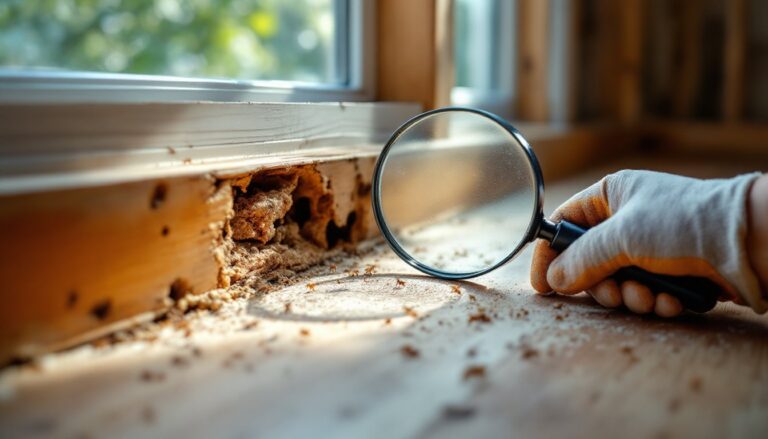
Sawdust and frass – Carpenter ants produce fine, granular sawdust (called frass) as they tunnel. You’ll find it piled near baseboards, under windowsills, or in crawl spaces. This dust looks cleaner than termite droppings and often contains bits of wood and ant parts.
Hollow-sounding wood – Tap suspected areas with a hammer. Infested wood sounds hollow or papery compared to solid wood. Pay special attention to wood near water sources, bathrooms, kitchens, and areas with plumbing leaks.
Live ants or dead bodies – Spotting carpenter ants indoors, especially in spring or early summer, signals an active colony. You may also find dead ants near nest entrances or in spider webs.
Entry holes – Small, clean, round holes (about 1/8 inch diameter) in wood or trim indicate access points to galleries. These holes look intentionally drilled, unlike the ragged damage termites cause.
Rustling sounds – In quiet spaces, you might hear faint rustling or crackling sounds coming from walls, especially at night when the colony is most active.
If you spot any of these signs, don’t delay. The longer you wait, the more damage accrues.
Top Carpenter Ant Killer Methods That Work
Chemical Treatments and Professional Products
Chemical carpenter ant killers come in several forms, each suited to different scenarios.
Liquid termiticides and insecticides are among the most effective options. Products containing fipronil or imidacloprid work as contact poisons and can be applied directly to entry holes, galleries, or as a perimeter barrier around foundation walls. Drill small holes (1/4 inch) into suspected wood, inject the liquid with a syringe-type applicator, and seal the holes with caulk afterward. Wear nitrile gloves and safety glasses when handling chemicals. These products kill on contact and provide residual protection for weeks to months, depending on the formulation.
Ant baits (gel or granule formulations) use a slower, colony-wide approach. Worker ants carry poisoned bait back to the nest, gradually eliminating the queen and the entire colony. This method takes longer, often 1–3 weeks, but it’s highly effective because the whole colony dies, not just surface-level ants. Popular products like Terro Carpenter Ant Baits work well for indoor use and pose lower toxicity risks to pets and children than liquid sprays if applied carefully.
Dust formulations (like diatomaceous earth blended with pyrethrins or boric acid-based dusts) are applied inside galleries and entry holes using a handheld duster. The dust clings to the ant’s exoskeleton, damaging it and causing dehydration. These are effective but require precise application inside galleries to work best.
When using any chemical product, read the label thoroughly, follow application rates exactly, and keep the product away from children and pets. Store chemicals in a locked cabinet and dispose of empty containers according to local regulations.
Natural and DIY Solutions
If you prefer a gentler approach or want to avoid synthetic chemicals inside your home, natural carpenter ant killer options exist, though they’re generally slower and require consistent application.
Diatomaceous earth (DE) is a powder made from fossilized algae. Food-grade DE is less toxic than chemical alternatives and works by damaging the insect’s protective coating, causing dehydration. Dust it directly into galleries, around entry points, and along baseboards. Reapply after rain or every 7–10 days for best results. Wear a dust mask when applying DE, as inhaling the powder irritates lungs.
Boric acid has been used for decades as a carpenter ant killer indoor and outdoor treatment. Mix it with sugar and water to create a paste, apply it near entry holes, or dust it into galleries. Boric acid is toxic if ingested, so keep it away from children and pets. Label all applications clearly.
Neem oil is derived from neem tree seeds and disrupts the ant’s reproductive cycle and nervous system. Dilute it according to product instructions and spray it on infested wood or into entry holes. Reapply every 7 days for 3–4 weeks. It’s less toxic than synthetic insecticides but slower-acting.
Cinnamon and coffee grounds have minor repellent properties and can be sprinkled around entry areas to discourage ants, though they’re not reliable killers. Think of them as a supplemental measure, not a primary treatment.
For a durable indoor solution, home improvement cost estimators can help you budget for both materials and potential structural repairs once you’ve eliminated the infestation and assessed the damage.
Prevention Tips to Keep Carpenter Ants Away
Preventing carpenter ant infestations is far easier, and cheaper, than treating an established colony. Carpenter ants need three things: wood, moisture, and access. Remove any of these, and you dramatically reduce your risk.
Eliminate moisture sources – This is the #1 prevention step. Fix leaky pipes, repair roof flashing, caulk gaps around windows and doors, and ensure gutters drain away from the foundation. Carpenter ants love damp, soft wood. Check crawl spaces, basements, and attics for standing water or condensation. Install a sump pump or dehumidifier if necessary.
Remove wood-to-soil contact – Ensure deck posts, fence railings, and siding have at least 6 inches of clearance from soil. Apply a wood preservative to lumber in contact with damp areas. Replace rotting wood immediately, it’s a carpenter ant magnet.
Trim tree branches – Carpenter ants travel along branches and can enter your home where limbs touch the roof or siding. Keep trees trimmed back at least 6 feet from your house.
Seal entry points – Caulk cracks in foundation, siding, and trim with paintable silicone caulk. Seal gaps around pipes and utility penetrations. Screen vents and chimneys to prevent access.
Store firewood safely – Keep woodpiles 20 feet away from the house and off the ground on a rack. Inspect logs for ants before bringing them inside.
Regular inspections – Once a year, walk your property and look for signs of infestation. Early detection makes treatment far simpler. Check vulnerable areas like bathrooms, kitchens, and any spots with a history of water damage.
According to home service provider reviews, homeowners who conduct routine maintenance inspections catch pest problems early, often saving thousands in structural repairs.
When to Call a Professional Pest Control Service
Some carpenter ant problems are too large or complex for a DIY approach. Call a licensed pest control professional if:
The infestation is severe or widespread – Multiple colonies, extensive damage, or ants appearing in multiple rooms signal a problem beyond DIY scope. Professionals have industrial-strength treatments and the expertise to locate satellite colonies.
Structural damage is significant – If you suspect damage to load-bearing joists, roof trusses, or wall studs, have a structural engineer or licensed contractor inspect before treating. Pest control pros can eliminate the ants, but structural repairs require licensed work and, in many jurisdictions, a permit.
You’ve tried DIY treatments without success – If 4–6 weeks of baiting or chemical application hasn’t worked, the colony is likely larger or located in an inaccessible area. Professionals use thermal imaging and other diagnostic tools to pinpoint nests.
You’re uncomfortable with chemicals – Even if you prefer natural methods, a pro can apply treatments more precisely, reducing exposure risks in your home.
Professional pest control typically costs $300–$1,000 for an initial inspection and treatment, depending on severity and location. Homeowner maintenance checklists often recommend professional inspections as part of seasonal upkeep, particularly in areas with high carpenter ant activity.
When hiring a pro, ask if they guarantee their work (many offer 30–90 day warranties), what products they use, and whether follow-up treatments are included. A reputable company should provide a written estimate and explanation of their approach.